
Why Fillvisa is Free Forever
USCIS PDFs are broken
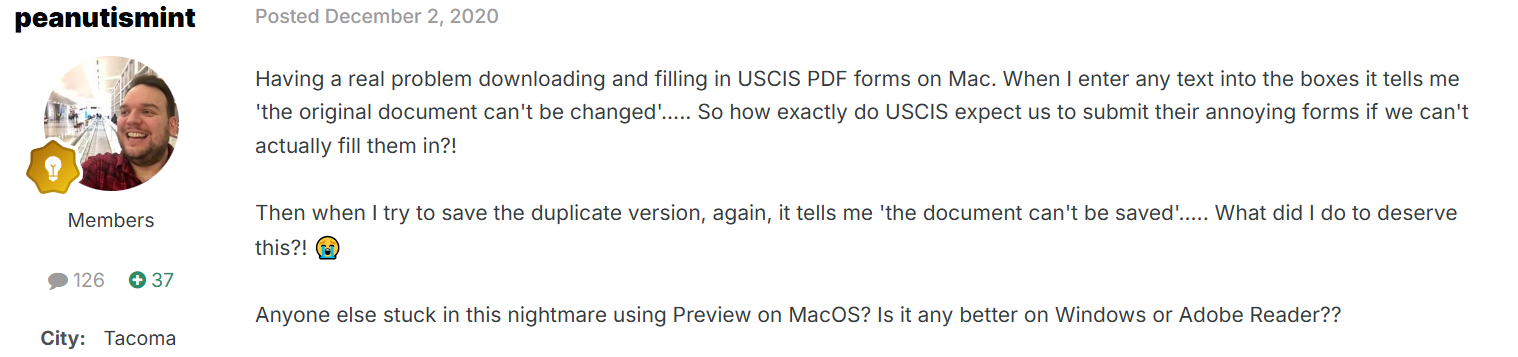
If you have ever tried opening a USCIS form on your computer, you already know the frustration. You can't fill the form on your web browser, you need to download special software. Some forms simply refuse to accept your inputs.
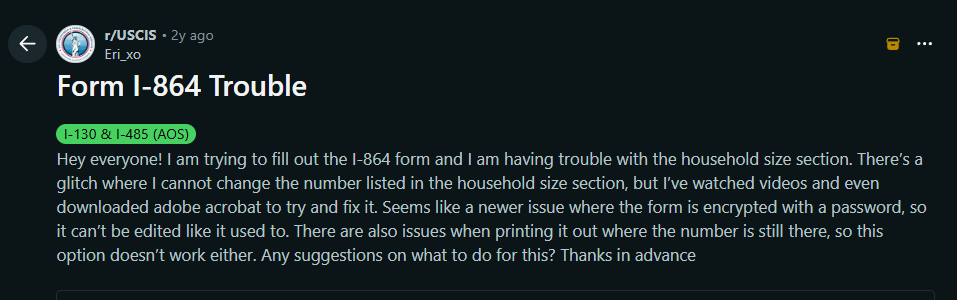
Some PDFs are password protected. They won't open even with Adobe Acrobat. You might spend an hour filling the form, but when you try to save the form, it says you need to upgrade to a paid plan
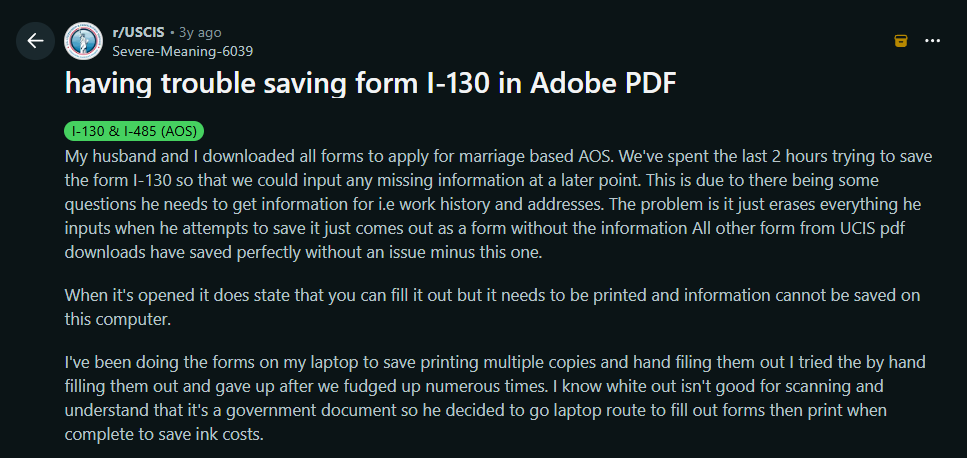
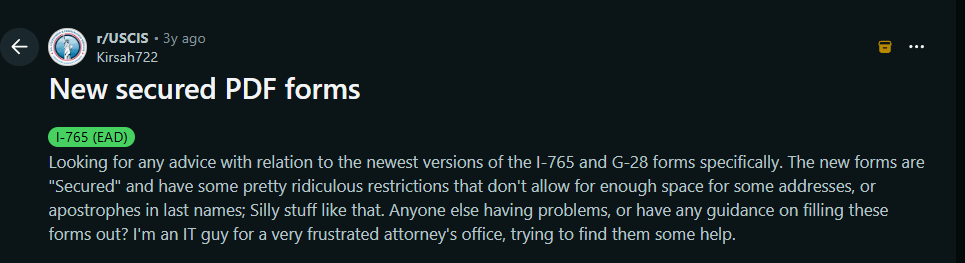
Even when a form lets you edit some fields, other parts remain locked or break when you try to print. As one post noted, some forms are “secured” in ways that don’t allow enough space for names or addresses - “apostrophes in last names” become a problem
All this leaves people frustrated and unsure if what they fill will actually “stick.” For something so important (immigration paperwork!), the experience feels archaic - like using a broken tool to do critical work.
Adobe’s monopoly on filling USCIS forms
A lot of people filling out immigration PDFs end up forced into using Adobe Acrobat - not because it’s the best choice but because it’s the only one that reliably works.
On Reddit someone summed up the dilemma bluntly:
“These forms are fillable PDFs with no edit permissions so we can’t edit and save them without going through hoops.”
For many, that leaves no good alternative. Without Acrobat you’re stuck - PDF editors fail, browsers don’t cooperate, or forms simply refuse to behave.
So people end up paying for a subscription just to type a few lines on a government form. It feels less like “filling a form” and more like “completing a bureaucratic test.”
...this extends far beyond just filling a form
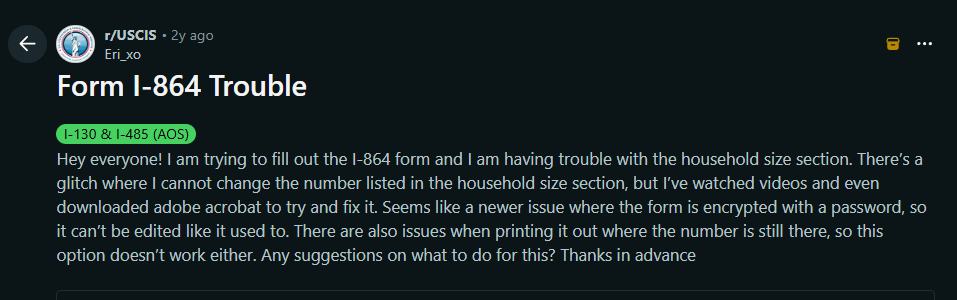
What makes USCIS paperwork stressful isn’t just the act of typing into a PDF. I've found hundreds of stories online, where the form experience spirals into a chain of extra problems. People mention fields not saving, forms refusing to reopen, signature pages disappearing, or Acrobat throwing errors right before submission. One person described filling out an I-485 only to discover later that the printed copy didn’t show half the data. Another said the form kept resetting every time they clicked to another field, making them start over multiple times.
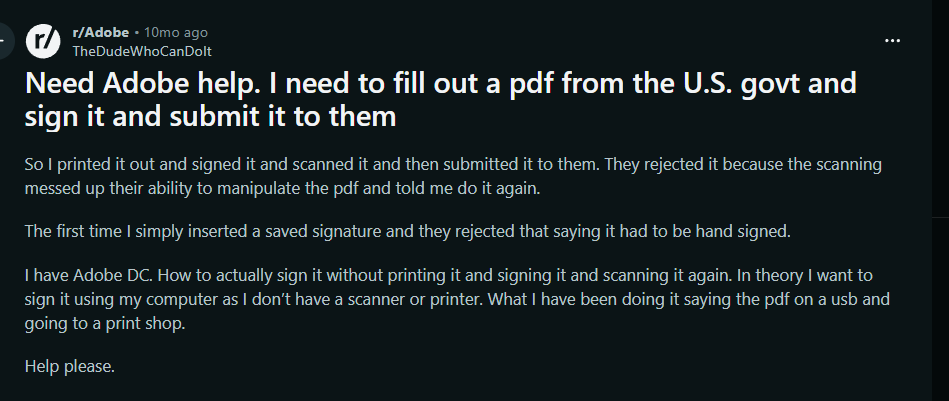
And when something breaks, you can’t simply fix one part. You often have to redo whole sections, check every page for missing inputs, re-sign, re-export, and hope it holds this time. It turns a simple administrative task into a mini project. You’re not just filling a form anymore. You’re troubleshooting technology that should have stayed out of your way in the first place.
...so you end up, either:
1. Filling it manually (print)
A surprising number of Reddit users say they eventually give up and just print the form. When the PDF won’t save, won’t display, or loses their data, printing becomes the fallback. It works, but it’s slow, messy, and increases the chance of small mistakes slipping through.
2. Paying for Adobe
Many users say they bought Acrobat purely because USCIS PDFs left them no choice. Some shared that free editors kept breaking the files, and previewing in a browser wiped out entire sections. Paying for Acrobat starts to feel less like an upgrade and more like a toll you pay so the form doesn’t fall apart. And even then, issues still pop up.
3. Using online PDF editors
The next option is online PDF tools, but users regularly warn each other about privacy concerns. Immigration forms contain passport numbers, addresses, travel history, and family details. Reddit threads often remind newcomers that many PDF websites store uploaded files, log IP addresses, or run analytics on uploads. For immigration paperwork, that feels risky. The convenience comes with trust issues.
How Fillvisa solves this problem
Fillvisa was built around a simple idea: filling a USCIS form should feel normal. No Acrobat installs, no “this field won’t save,” no mystery errors. You just open a clean web form, type your information, and get a perfectly filled official USCIS PDF at the end.
Instead of fighting with the government’s fragile PDFs, Fillvisa gives you a modern interface that guides you through every field. Inputs are structured, validation happens as you go, and conditional questions unfold the way they always should have. When you’re done, Fillvisa generates the official USCIS PDF with your answers placed exactly where they belong. You never touch the original broken PDF at all.
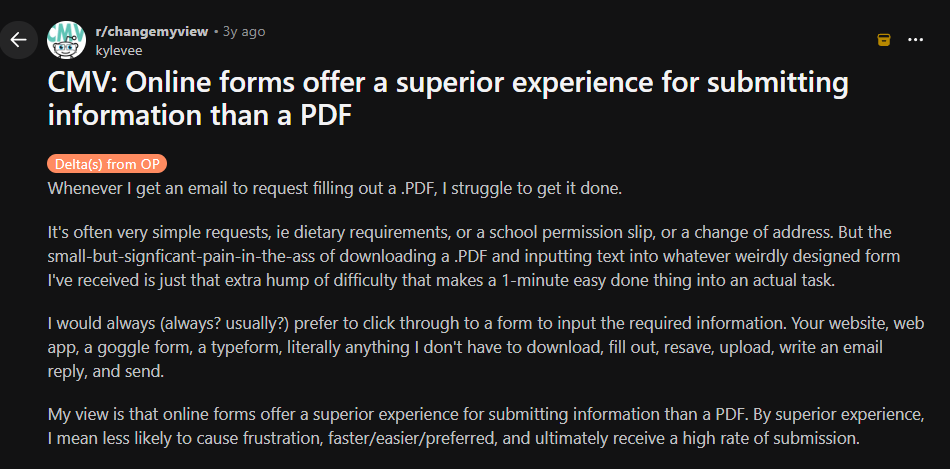
Users on Reddit often say they wish someone would “turn these PDFs into normal web forms.” That’s basically the entire mission. Remove the friction, reduce mistakes, and stop making people spend hours on tasks that should take minutes.
Free, 100% browser only, no login required
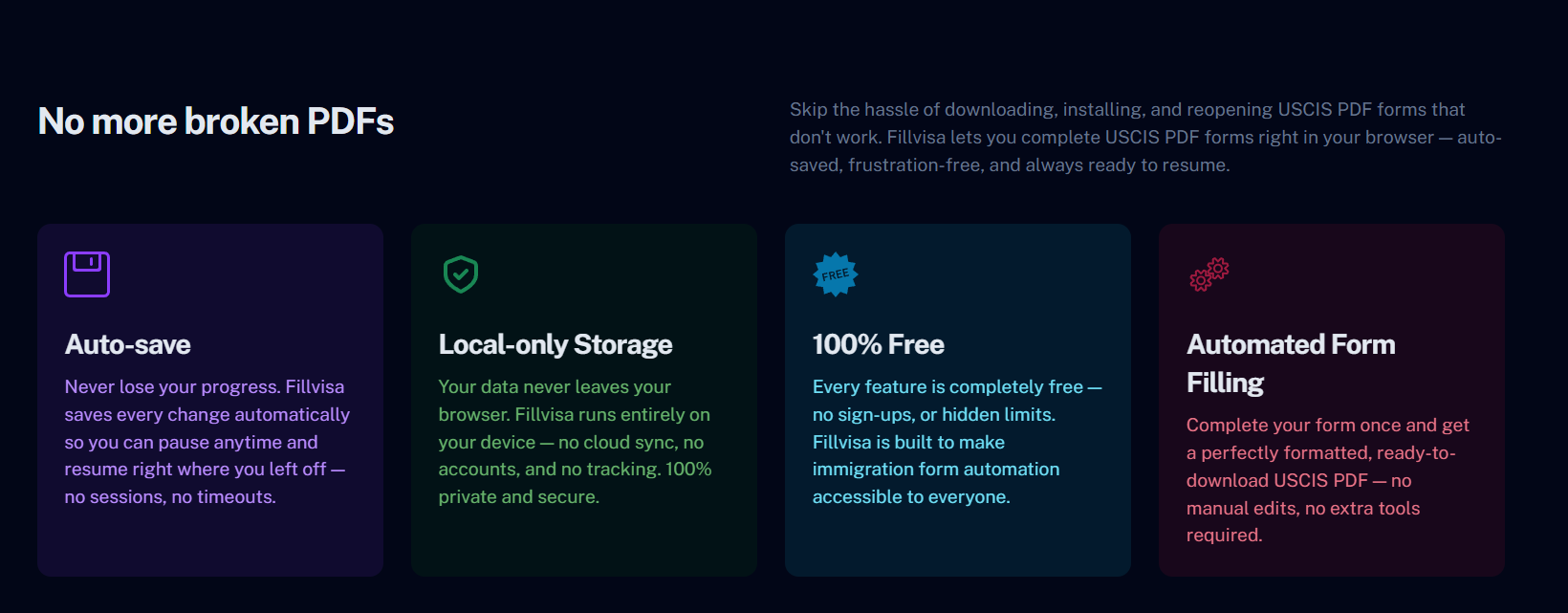
Fillvisa works entirely inside your browser. Nothing you type is sent to a server. Nothing is stored online. There’s no account, no signup wall, no tracking, no “export” fee. You open the page, fill the form, download the official USCIS PDF, and you’re done.
This design is intentional. People on Reddit often say they don’t trust random PDF sites because they upload sensitive immigration info to someone else’s server. Fillvisa avoids that completely by never touching your data. Everything lives on your device, and once you close the tab, it’s gone.
Fillvisa Plus works differently. It’s built for lawyers, and it does store data so firms can collaborate, manage clients, import PDFs, and work across cases. But that data is encrypted and stored securely, and it’s separated from the free product. The free version stays fully browser only, forever.
Fillvisa is free because the basics should not require friction, risk, or subscriptions. Anyone should be able to fill a government form without paying for software or worrying about where their information goes.
The Architecture of “Free Forever”
People usually assume that “free forever” means the product loses money forever. But Fillvisa works because the architecture itself is lightweight. Since everything happens inside the browser, there are no servers to maintain, no databases to scale, and no storage costs quietly piling up in the background.
Most tools get expensive because every user action hits the backend. Fillvisa flips that model. Your device does the work. Your browser stores the data temporarily. Your computer generates the final PDF. That means I’m not paying to host your information, process your inputs, or store years of submissions.
| Design Principle | Outcome |
|---|---|
| Local-first (no backend) | No data storage costs, no privacy risks |
| Static deployment | Near-zero hosting costs |
| No logins | No user tracking or accounts |
| Browser storage | Works offline, secure, and instant |
This is the secret: free becomes sustainable when your infrastructure footprint is close to zero. A browser-only tool isn’t just safer for users. It’s also dramatically cheaper to operate. So instead of worrying about cloud bills, I can focus on making the experience better for everyone.
The Philosophy Behind Free
There’s a reason Fillvisa isn’t built like most software in immigration tech. Immigration paperwork already creates stress, uncertainty, and financial pressure. Adding another paywall on top of that felt wrong. If the government gives you the form for free, the tool you use to fill it shouldn’t turn into another barrier.
Free, in this context, isn’t a marketing trick. It’s a stance. It says: everyone deserves access to a clear, safe, modern way to complete their paperwork, no matter their income, background, or tech comfort level. When people online complain about forms breaking or being forced to pay for Adobe, the underlying message is the same: “Why is something this basic so hard?”
So Fillvisa approaches the problem differently. Free gives people breathing room. Free removes friction. Free reduces the temptation for companies to harvest data or push ads. And free creates a shared expectation that the tool exists to serve, not extract.
How Does Fillvisa Make Money
Whenever I say Fillvisa is free forever, the next question is always the same: “Okay, then how do you make money?” The answer is simple. The free version is for immigrants filling their own forms. The paid product, Fillvisa Plus, is for lawyers and legal professionals who need collaboration tools, client management, PDF import, version control, encrypted storage, and workflow features.
Most immigration firms already pay for software. They’re not looking for a free tool. They’re looking for something modern, faster, and less painful than what they have today. And that’s where Fillvisa Plus fits. It’s a separate product, built for a completely different audience with completely different needs.
So the business model is clean: consumers get a trustworthy tool at zero cost, and professionals who need advanced capabilities pay for software that actually improves their workflow. One doesn’t subsidize the other. Free stays free because the paid side stands on its own.
What Free Enables (Technically and Ethically)
Making Fillvisa free does more than remove a price tag. It unlocks an entirely different way to build. Because nothing is stored on a server, I don’t need to collect personal data. I don’t need to track you. I don’t need to profile you for ads or optimize for engagement. The product doesn’t depend on squeezing value from your information, which is rare for anything involving sensitive documents.
Technically, free lets the tool stay simple. No accounts. No backend migrations. No login friction. When everything runs in your browser, the product becomes fast, quiet, and resilient.
Ethically, it shifts the relationship. There is no hidden tradeoff. You’re not paying with your wallet or your privacy. You use the tool, it helps you, and you walk away. That’s it. Free creates a clean boundary where the user’s interests and the product’s interests stay aligned.
How Free Helps With Distribution
Free doesn’t just make Fillvisa more accessible. It makes it spread. Immigration forms touch every kind of person, in every kind of situation, and most of them are already sharing tips, screenshots, and links in online communities. When a tool works instantly, requires no signup, and doesn’t ask for anything in return, people naturally talk about it.
On Reddit, Discord groups, WhatsApp threads, and immigrant support forums, people already swap whatever helps them survive the bureaucracy. A free tool travels faster than a paid one because no one has to think twice before recommending it. There’s no “Should I tell them about this? What if it costs money?” hesitation. Free lowers the social cost of sharing.
This also creates a kind of honest distribution. If Fillvisa were paid, most users would never try it. But because it’s free, the tool gets real usage, real feedback, and real visibility without buying ads or manipulating attention. Good things spread when they remove friction, not add it.
Why “Forever Free” Matters for Credibility
Immigration is already full of uncertainty. People worry about deadlines, approvals, fees, documents, and whether they’re doing everything correctly. The last thing they need is a tool that might suddenly start charging them or locking features behind a paywall later. Saying Fillvisa is free forever isn’t just about pricing. It’s about trust.
When you tell users you won’t store their data, won’t track them, and won’t charge them later, the promise only holds if the business model actually supports it. Free forever signals that I’m not building a trap. I’m not collecting your information in the background. I’m not using “free” as a teaser for a bait and switch.
Credibility matters because people share these tools with family members, friends, and communities that rely on each other. If Fillvisa ever broke that trust, it wouldn’t just hurt the product. It would hurt the ecosystem that keeps it alive. Free forever is a commitment that the door stays open, no matter how big the product grows.
A Public Experiment in Better Bureaucracy
At its core, Fillvisa is an experiment. What happens if you take something famously painful - government paperwork - and rebuild it the way it should work? Clean interface. Clear guidance. No paywalls. No anxiety about saving, printing, or losing progress. Just a simple, humane experience layered on top of a system that rarely feels human.
By keeping it free and browser only, Fillvisa becomes something anyone can test, break, improve, and pass along. It’s a public experiment in proving that bureaucracy doesn’t have to feel like punishment. It can be predictable, transparent, and even kind. If enough people use it, we start nudging expectations toward a better standard.
Maybe one day government forms won’t be PDFs at all. Maybe they’ll be straightforward web experiences that don’t require tricks, workarounds, or specialized software. Until then, Fillvisa is a small step in that direction - a signal that we don’t have to accept the status quo just because it has always been this way.
✍️ Footnote
- Check out our immigration form library
- If you are an immigration lawyer/paralegal:
- You can start using Fillvisawith your clients right now — 100% free.
When you’re ready for collaboration, shared dashboards, and automation at scale, move to Fillvisa Plus.